
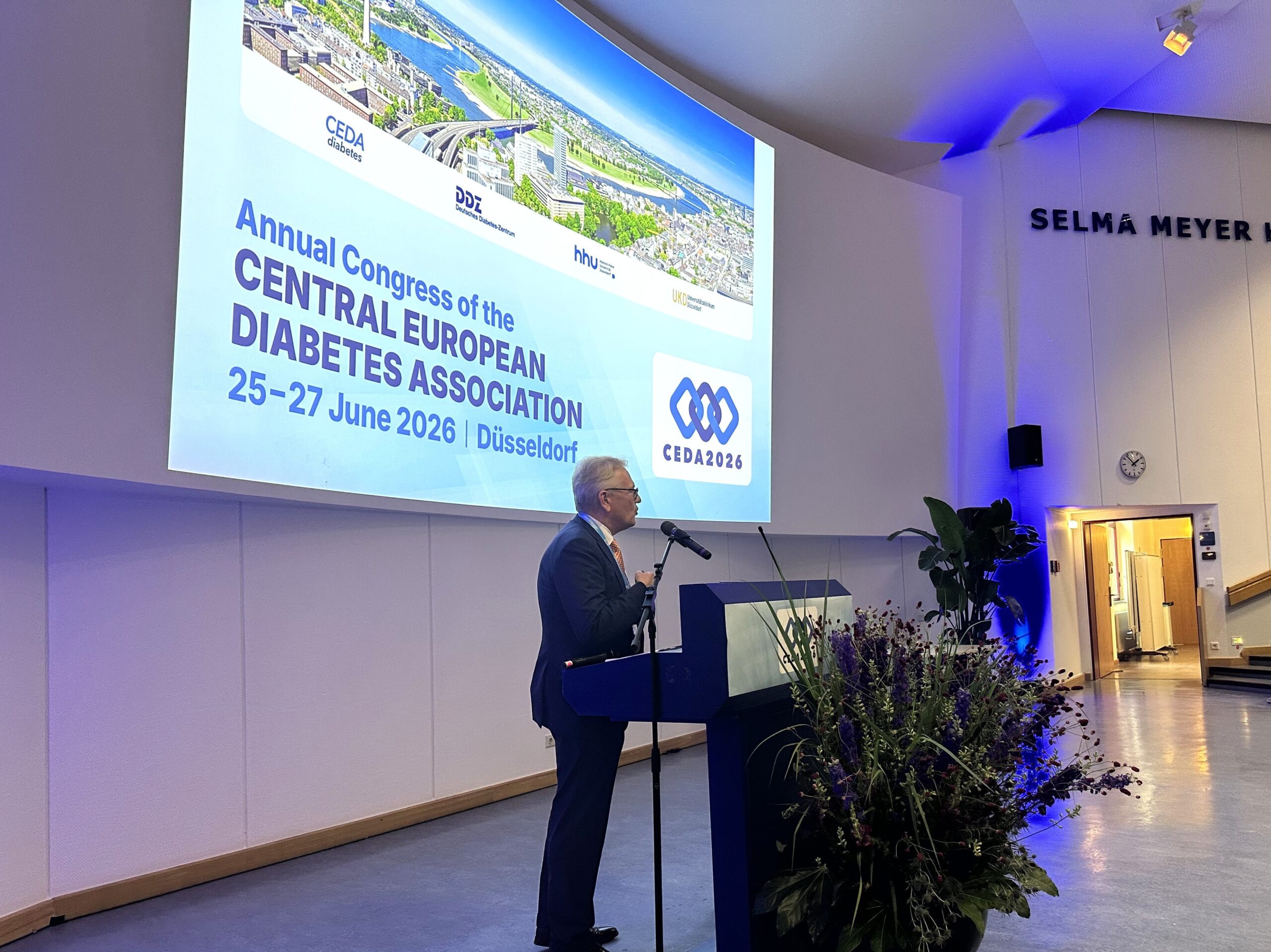
For three days, Düsseldorf took centre stage in the European diabetes community: from 25 to 27 June 2026, the Congress of the Central European Diabetes Association (CEDA) took place at the German Diabetes Centre (DDZ), an affiliated institute of Heinrich Heine University Düsseldorf (HHU). Around 250 participants exchanged views on the latest research findings and new approaches to diabetes care. A total of 16 sessions, 56 poster presentations and four industry symposia from 25 countries clearly demonstrated that diabetology is increasingly focusing on the individual patient.
Not all cases of diabetes are the same. Behind the diagnosis lie various forms of the condition, each with different risks of complications. Identifying these differences precisely and treating each person with diabetes as individually as possible is one of the key tasks facing diabetology in the coming years. Precision diabetology was also the unifying theme at the three-day CEDA Congress held at Düsseldorf University Hospital (UKD). Research has made significant progress in recent years: clinically relevant subtypes are now known and their molecular basis is increasingly well understood. “The more precisely we understand which diabetes subtype a person has, the more targeted our treatment can be. This not only makes treatment more effective but could also help conserve resources within the healthcare system,” emphasises Prof. Michael Roden, Scientific Director and Spokesman for the Board of the DDZ, as well as Congress President of CEDA 2026. The key task in the coming years will be to translate this knowledge into everyday clinical practice. “Conferences such as CEDA make a crucial contribution. Comparing different care models and research approaches from Central, Eastern and South-Eastern Europe shows where progress has been made and where gaps still remain,” explains Roden.
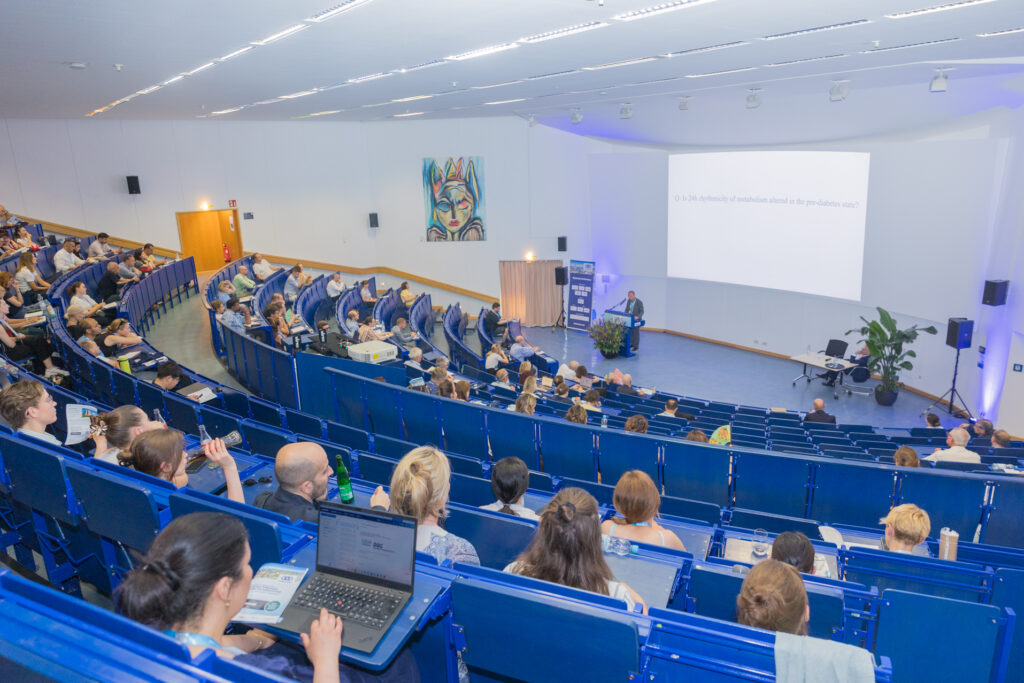
Two topics received particular attention at the congress: the link between type 2 diabetes and metabolic dysfunction-associated steatotic liver disease (MASLD), formerly known as fatty liver disease, and cardiovascular risks. Around 70 per cent of all people with type 2 diabetes also have MASLD; different subtypes of diabetes carry varying levels of risk of developing severe liver damage. The aim of precision diabetology is to identify these high-risk groups at an early stage, using just a few blood test results available from routine laboratory tests, before irreversible damage occurs. The same applies to cardiovascular diseases.
Presentation of the first Jühling Prize to Prof. Péter Kempler
CEDA 2026 offered participants a total of 16 scientific sessions on topics of high clinical significance, including one joint symposium each with the German Centre for Diabetes Research (DZD) and the European Association for the Study of Diabetes (EASD). Four industry symposia rounded off the programme. The congress’s opening ceremony featured welcoming addresses from the worlds of politics, local community and academia: Ina Brandes, Minister for Culture and Science of the State of North Rhine-Westphalia, addressed the participants via video. Present in person were Miriam Koch, Deputy Mayor for Culture, Integration and Health of the state capital and Prof. Anja Steinbeck, Rector of HHU.
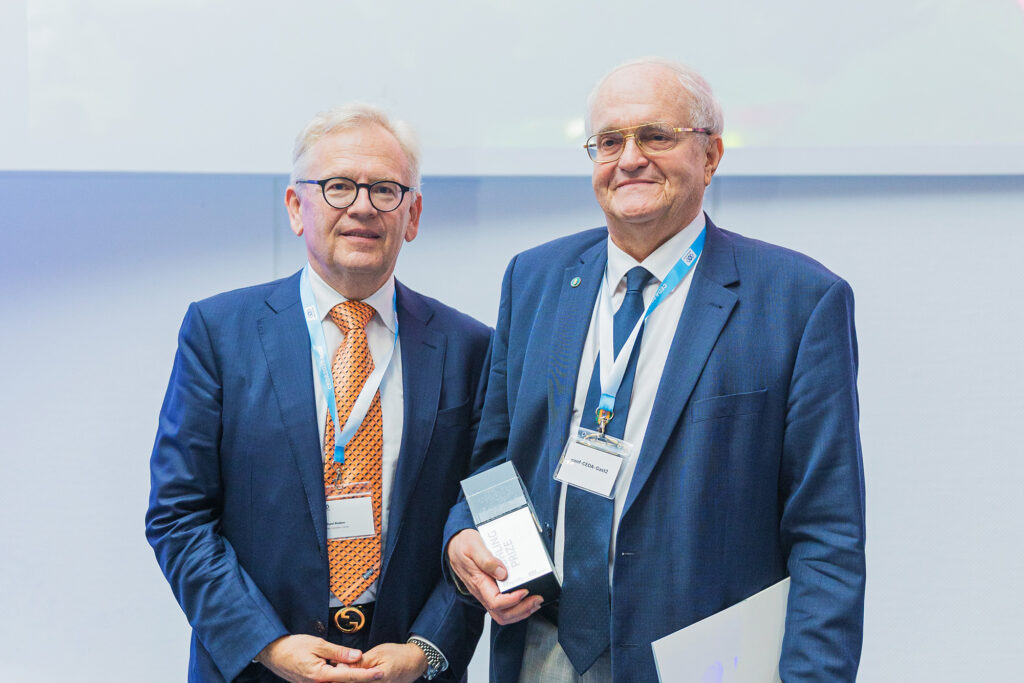
As part of CEDA 2026, Prof. Péter Kempler, President of CEDA (2022–2026) and Professor in the Department of Medicine and Oncology at Semmelweis University in Budapest, Hungary, was awarded the Jühling Prize by the Anna Wunderlich and Ernst Jühling Foundation. Kempler emphasises the particular value of the congress format: “CEDA facilitates cross-border exchange on diabetes care, thereby creating something that is essential to medicine: a space where clinical practice and research truly come together. The German Diabetes Centre in Düsseldorf was the ideal host for this.”
About CEDA
The Central European Diabetes Association (CEDA) is an international scientific society that promotes collaboration amongst diabetes experts, particularly in Central, Eastern and South-Eastern Europe. Founded in 1969 as the International Danube Symposia, CEDA organises annual congresses, which rotate between different locations, and fosters discussion on regional challenges in diabetes research and care.
Photos whose image rights belong to the DDZ may be used for editorial purposes with the credit: “Deutsches Diabetes-Zentrum”. The reproduction is royalty-free. Stock photos may not be reused for licensing reasons. We would appreciate it if you could send us a proof copy or let us know where the material will be published.
Contact person at the DDZ for further questions is: