
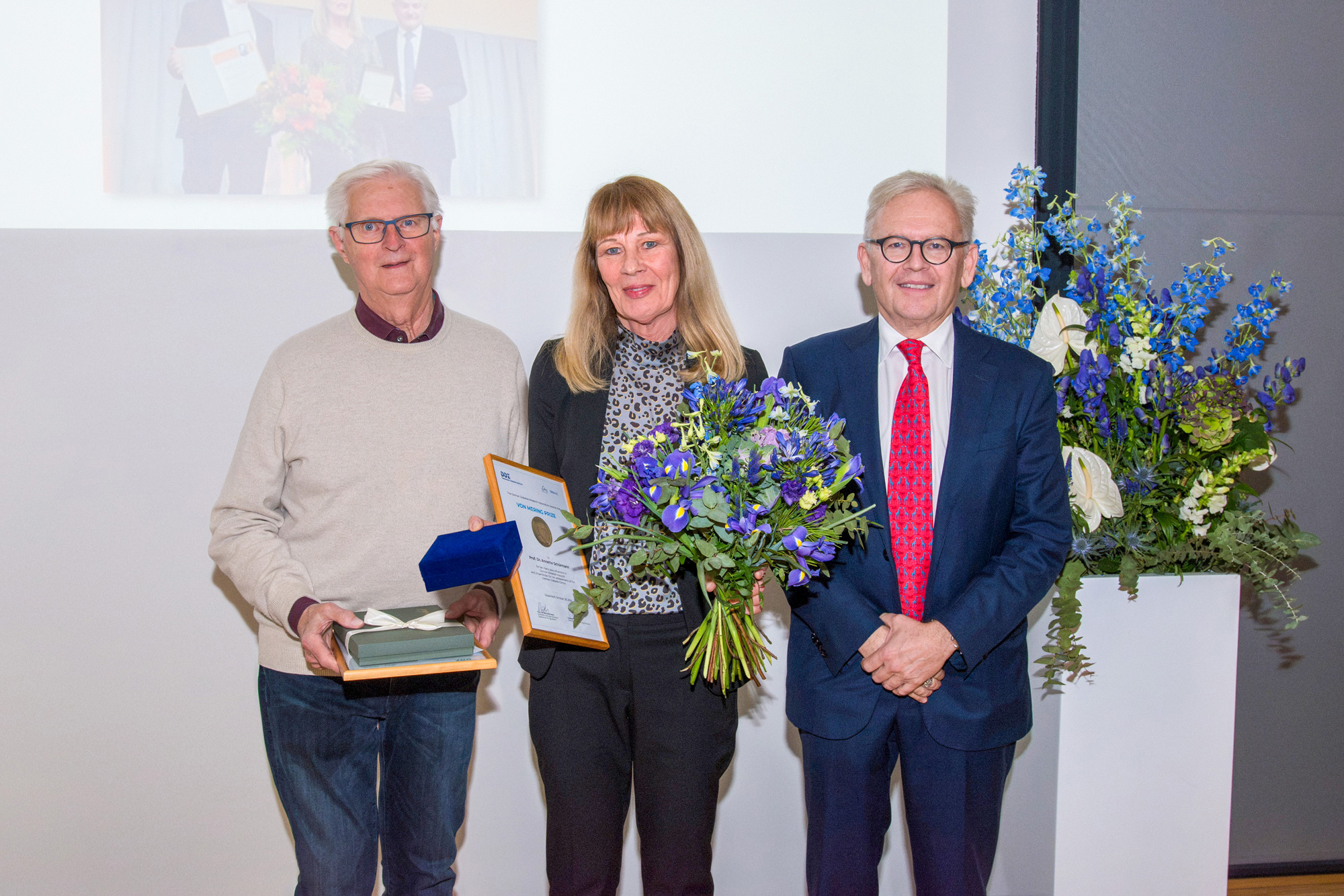
Diabetes and metabolism researcher Prof. Dr. Annette Schürmann has been awarded the 2026 Von Mering Gold Medal by the German Diabetes Center (DDZ). Through her research on the genetic and epigenetic causes of type 2 diabetes and obesity, she has significantly advanced our understanding of the development of metabolic diseases. Since 2016, the Von Mering Gold Medal has been awarded by the DDZ Board of Directors to outstanding individuals who have made significant research contributions and have been key advocates for diabetes research in Germany and for the DDZ.
“With her work on the molecular protective mechanisms of insulin-producing beta cells, Professor Schürmann has shaped a central field of diabetes research. Her findings serve as an important starting point for new therapeutic approaches to type 2 diabetes,” emphasizes Prof. Michael Roden, Scientific Director and Spokesperson for the DDZ Executive Board, as well as Director of the Department of Endocrinology and Diabetology at the University Hospital Düsseldorf. “As a spokesperson for the German Center for Diabetes Research (DZD), she has also played a key role in shaping the strategic direction of German diabetes research and has significantly strengthened collaboration with the DDZ, among others.”
From 2009 to 2025, Dr. Schürmann was a professor of nutritional sciences at the University of Potsdam and headed the Department of Experimental Diabetology at the German Institute of Human Nutrition Potsdam-Rehbrücke (DIfE), a partner institute of the DZD. As a long-standing patron of the Young Researchers’ Working Group of the German Diabetes Association (DDG), she has been committed to inspiring and supporting young scientists in the field of diabetology.
Research on genes, epigenetics, and beta cells
In her research, she focused on which genes are relevant to the development of diabetes, the extent to which the development of type 2 diabetes is also associated with epigenetic changes in the islet cells, and the positive effects of diet and exercise. In particular, she succeeded in identifying molecular protective mechanisms that prevent the loss of function in insulin-producing beta cells. These findings provide an important starting point for new therapeutic approaches to type 2 diabetes. She has already received numerous awards for her work, including the
Werner Creutzfeldt Prize (2016), the Hellmut Otto Medal from the DDG (2021), and the Paul Langerhans Medal (2025) from the DDG, as well as the Medal of the German Society for the Study of Obesity (2021).
“I am deeply honored that the research work of my team and myself has been recognized with the Von Mering Gold Medal. Our successes would not have been possible without the constructive collaborations both within and outside the German Center for Diabetes Research (DZD). I would therefore also like to thank my many national and international colleagues,” says Prof. Schürmann.
Von Mering Lecture on cellular senescence
The traditional Von Mering Lecture was delivered by Dr. Ulf Smith, Professor of Medicine at the Sahlgrenska Academy of the University of Gothenburg (Sweden) and Director of the Lundberg Laboratory for Diabetes Research at the University of Gothenburg, under the title “Importance of Cell Senescence in Dysmetabolic States.”
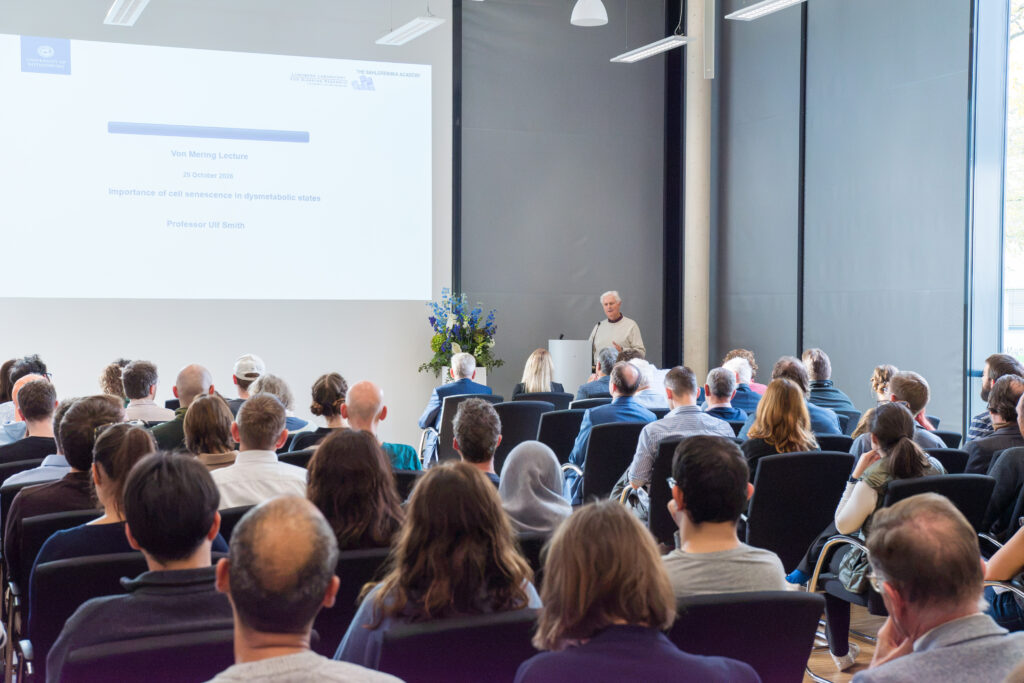
With his expertise on the mechanisms underlying the development of type 2 diabetes, Prof. Smith is also one of the leading international figures in diabetes research. Throughout his scientific career, he has published approximately 600 original papers and review articles on topics such as diabetes, obesity, lipid and glucose metabolism, as well as insulin action and the molecular mechanisms of insulin signaling. Among other roles, he has served as president of the European Association for the Study of Diabetes (EASD) and the European Foundation for the Study of Diabetes (EFSD).
Joseph von Mering: Namesake of the gold medal
The physician Joseph von Mering (1849–1908) was born in Cologne and is considered one of the most important diabetes researchers. Together with Oskar Minkowski, he explained the relationship between the pancreas and metabolism—which led to the discovery of the vital hormone insulin. The scientists Banting, Best, and McLeod later made this hormone usable for therapeutic purposes.
Photos whose image rights belong to the DDZ may be used for editorial purposes with the credit: “Deutsches Diabetes-Zentrum”. The reproduction is royalty-free. Stock photos may not be reused for licensing reasons. We would appreciate it if you could send us a proof copy or let us know where the material will be published.
Contact person at the DDZ for further questions is: